
The Philippines is not yet in the formal season of the 2028 presidential campaign, but politically, the country has already entered it. And it is entering that contest under conditions that should worry anyone who cares about governance, stability, and democratic credibility. The signs are everywhere: a politically explosive ICC case involving former President Rodrigo Duterte, the continuing breakdown of elite alliances, mounting tensions in the South China Sea, and a public increasingly forced to weigh grand political theater against everyday survival.
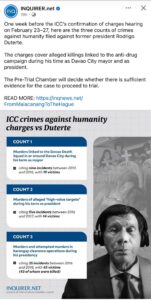
The ICC case against Duterte is no longer just a legal matter. It has become a political fault line. Whether one supports or opposes Duterte, the reality is that the case sharpens polarization, revives old loyalties, and reactivates the emotional core of recent Philippine politics. It places the Marcos administration in an uncomfortable position and deepens the political divide.
The SCS dispute continues to be used as both a national security issue and a political instrument. The Philippines has the right to defend its claims in the SCS, but the political question is whether this defense is being pursued in a manner that genuinely strengthens national resilience or one that amplifies confrontation while leaving the country dangerously exposed. Assertive rhetoric may produce applause, but applause is not a strategy. Press releases are not deterrence. And constantly framing foreign policy through the lens of public spectacle can create the illusion of strength while masking structural vulnerability. And this vulnerability is compounded by governance issues at home.
Budget controversies, allegations of irregular allocations, and public anxiety over corruption continue to erode trust in institutions. This is the deeper problem for the Marcos administration. Legitimacy is not lost only through scandal alone. It is also lost when a government appears disconnected from the urgency of ordinary life. When citizens see elite political conflict dominating headlines while fuel inflation, wages, transport costs, and food insecurity remain unresolved, they begin to suspect that the state is functioning more as a battlefield for political factions than as an instrument of public service.
This is why the long road to 2028 already looks turbulent. The core issue is not simply who will run, but the emerging political environment. At present, it is one shaped by elite rivalry, institutional distrust, and geopolitical tension, all unfolding while the social contract grows thinner. A presidency can survive opposition, but the hardest to confront is the steady erosion of public confidence and trust.
The danger for the Philippines is that by 2028, voters may no longer be choosing among visions of national development, but among competing expressions of anger, nostalgia, and resentment. That is not democratic renewal. This is democratic exhaustion dressed up as electoral competition. And unless the country’s political class rediscovers the difference between governance and maneuvering, the gathering storm will not only shape the next election. It will define the kind of republic Filipinos inherit after it.
Source: The Lobbyist
https://www.thelobbyist.biz/perspectives/article-details/prime%20insight/fractured-power-fading-legitimacy-ph-enters-the-long-march-to-2028