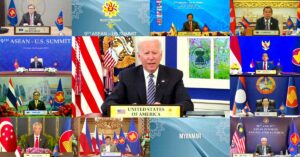

The recently concluded ASEAN Summit in Kuala Lumpur, Malaysia, marked one of the most consequential moments in the bloc’s history. For the first time since the 1990s, ASEAN expanded its membership, welcoming Timor-Leste as its 11th member. Alongside this milestone came the landmark Cambodia–Thailand “Kuala Lumpur Peace Accord” and upgraded frameworks for regional and external trade cooperation, including the ASEAN–China Free Trade Area (ACFTA) 3.0 Protocol. Together, these developments represent a decisive shift: ASEAN is not merely adapting to an increasingly fragmented world. It is asserting its centrality and coherence amid global turbulence.
A Symbol of Inclusivity and Identity
Timor-Leste’s formal admission carries more than ceremonial importance. It represents ASEAN’s renewed commitment to inclusivity and regional identity. For Dili, membership opens pathways to the ASEAN single market and deeper participation in Southeast Asia’s regional economy. For ASEAN, it demonstrates the bloc’s readiness to integrate smaller, less developed economies —an act of solidarity that reinforces unity amid growing geopolitical divides. This expansion revives ASEAN’s founding vision: to ensure that no Southeast Asian nation remains isolated or left behind from the regional framework of peace, prosperity, and cooperation.
Peace and Stability as Economic Foundations
Equally significant was the signing of the Cambodia–Thailand border peace accord. Long a hotspot of tension, the normalization of this border zone strengthens ASEAN’s credibility as a broker of peace, not merely a facilitator of economic dialogue. Stability in such historically contested areas boosts investor confidence, secures infrastructure routes, and safeguards cross-border supply chains. This, in turn, contributes to ASEAN’s long-term goal of creating a secure and predictable environment for trade and development.
Trade Resilience in a Fragmented Global Economy
The Kuala Lumpur Summit also pushed forward an ambitious economic agenda. The ACFTA 3.0 upgrade now extends beyond tariffs—it encompasses digital economy integration, green technology cooperation, and supply-chain resilience. These are forward-looking moves, recognizing that the future of trade lies not in low-cost production but in sustainable, tech-driven transformation. ASEAN’s commitment to digital and green connectivity ensures its relevance in a rapidly evolving global economy.
Importantly, the summit reaffirmed ASEAN’s role as a “pivot and buffer” in the intensifying US–China trade rivalry. By strengthening its internal integration and diversifying external partnerships, ASEAN seeks to reduce vulnerability to great-power shocks. For the Philippines, this represents a crucial hedge: a chance to expand regional trade, attract diversified investments, and lessen overdependence on any single power bloc.
Still, the promise of integration faces familiar hurdles. Implementation across highly unequal member states will test ASEAN’s institutional capacity. External shocks, including tariff wars, technology restrictions, and decoupling pressures, could yet disrupt ASEAN’s ambitions.
Conclusion
The ASEAN Summit in Kuala Lumpur, therefore, is more than a diplomatic event—it is a strategic turning point. It signals ASEAN’s determination to evolve from a reactive collective into a proactive, cohesive, and future-oriented community capable of navigating the complexities of a multipolar world.
Source: The Lobbyist
https://www.thelobbyist.biz/perspectives/article-details/prime%20insight/aseans-turning-point-signals-a-more-cohesive-and-future-ready-sea