
President Ferdinand Marcos Jr. has finally said it: the Philippines, under his watch, will not remain neutral if the China–Taiwan conflict turns hot. In a Firstpost interview, he declared there’s “no way” the country can stay out, citing geography and the need to evacuate thousands of Filipinos working in Taiwan. Sounds noble, until you realize it’s essentially an unsolicited RSVP to a war we didn’t start and can’t win.
Marcos Jr.’s justification? Taiwan’s proximity to northern Luzon. Apparently, being near a crisis means you must join it. Never mind that other nations with equal or greater proximity, hello, Vietnam, manage to keep a cool distance while safeguarding their own interests. But in Malacañang’s version of “logic,” proximity equals participation, and participation means rolling out the red carpet for U.S. Indo-Pacific strategy, complete with expanded EDCA sites pointed straight at Taiwan.
Under his administration, the Philippines has deepened its embrace of Washington, even engaging in quiet security cooperation with Taiwan on intelligence and coast guard coordination. Any pretense of neutrality has evaporated, replaced by the image of a willing U.S. outpost, one Chinese missile away from catastrophe.
Here’s the problem: by publicly committing to involvement before a single shot is fired, Marcos Jr. has pre-emptively surrendered the nation’s agency. This “preemptive entrapment,” Beijing will view the Philippines as an enemy combatant in the event of war. EDCA sites and northern provinces could be first-strike targets.
What’s missing here is a sober cost–benefit analysis. Has anyone in Malacañang considered the economic, energy, and diplomatic fallout of being dragged into a Taiwan Strait conflict? Or is this just another performance for Washington’s applause? Ensuring Filipino safety abroad is valid, but it’s a humanitarian task, not a blank check for aligning the country with America’s war planning.
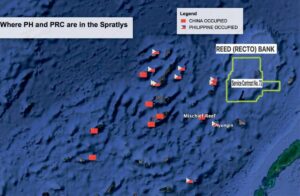
There’s a quieter, smarter path: prepare evacuation contingencies without broadcasting military intentions. But subtlety isn’t this administration’s strong suit. Instead, Marcos Jr.’s declaration escalates the regional security dilemma, handing China the perfect excuse to harden its South China Sea positions and ramp up countermeasures against Philippine-based U.S. facilities.
Neutrality is a choice. Diplomacy is a tool. And sovereignty is not defined by how close we are to Taiwan, but by whether our leaders put Philippine interests first. Right now, the country is being positioned as a frontline pawn in a rivalry between giants, without a coherent long-term vision for strategic autonomy.
By couching this geopolitical surrender in the language of inevitability, Marcos Jr. treats war like a typhoon, something you can’t stop, only brace for, and it’s the “new normal.” But war is not weather; it’s a consequence of decisions. And in this case, those decisions risk turning the Philippines from a sovereign state into a convenient launchpad for someone else’s conflict.
In the end, Marcos Jr.’s logic is not the path that leads to safety, prosperity, or genuine sovereignty of the Philippines.
Source: The Lobbyist
https://www.thelobbyist.biz/perspectives/article-details/prime%20insight/taiwan-strait-marcos-jrs-art-of-geopolitical-self-sabotage-and-distorted-logic