

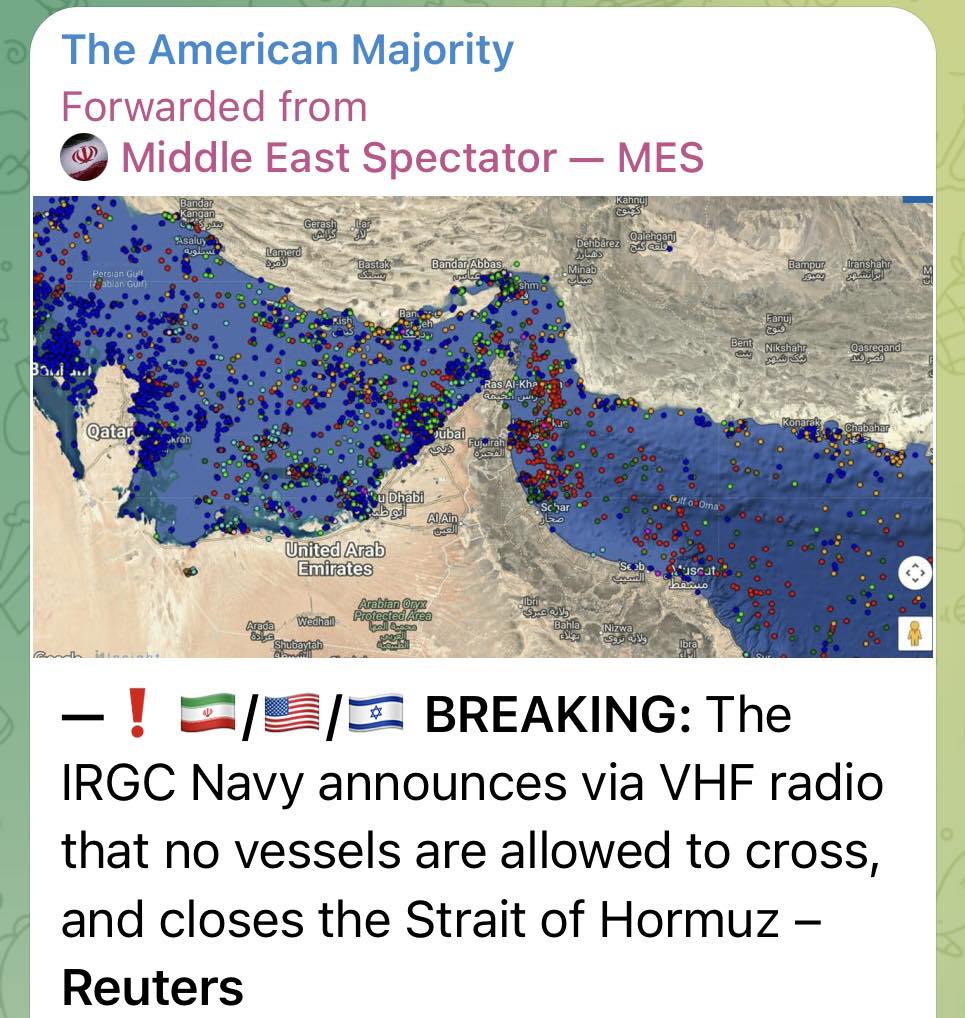
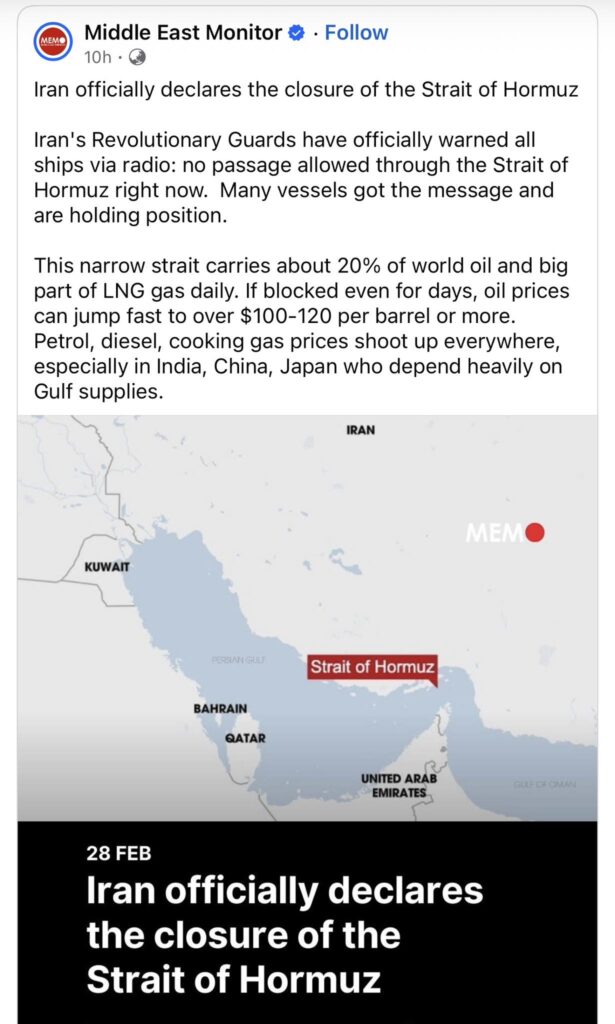
If the Strait of Hormuz is effectively closed, the impact on the Philippines would be immediate, structural, and multi-layered, even though PH is geographically far from the Gulf. The strategic reality:
1. Energy Shock → Domestic Inflation. Around 20–30% of global oil supply passes through Hormuz.. A closure means: Global oil prices spike sharply, LNG flows tighten, and shipping insurance premiums surge.
For the Philippines, a net energy importer, this translates into:
 Higher fuel prices
- Higher electricity costs
- Transport fare pressure
- Food price escalation (logistics-driven inflation)
This becomes imported inflation, beyond BSP (Central Bank) control.
Expect the following :
 Peso depreciation pressure
- Wider current account deficit
- Slower growth
2. Supply Chain Disruption – Even if PH oil does not come directly from the Gulf, pricing is global benchmarked. Hormuz disruption will:
- Tighten tanker availability
- Reroute shipping
- Delay deliveries
- Increase freight costs
What are the Results…
- Manufacturing cost increases
- Construction delays
- Fertilizer cost spikes (impacting agriculture)
3. OFW Vulnerability: Over 2 million Filipinos live/work in the Gulf. Escalation in UAE, Qatar, Bahrain, Kuwait and Saudi Arabia, could mean:
- Repatriation risks
- Job displacement
- Remittance slowdown
Remittances = to more or less 9% of PH GDP
Even a temporary disruption affects:
- Consumption
- Peso stability
- Banking liquidity
4. Maritime Insurance & Trade – Hormuz closure will push: War risk premiums up and global shipping costs higher. Philippine imports will be affected in terms of
- Fuel
- Wheat
- Fertilizers
- Machinery
This feeds directly into:
- Food inflation
- Construction slowdown
- Industrial cost escalation
5. Strategic Spillover – This is where the EDCA sites (U.S. bases) concern becomes relevant and imperative..
Hormuz closure signals:
- A widening U.S.–Iran confrontation
- Global force posture shifts
- Potential forward deployment expansions
Meaning: U.S. alliance networks, including the Indo-Pacific may become more operationally activated.
In escalation logic Forward-access states (like the Philippines under EDCA) move from:
- Peripheral partners to
- Strategic nodes
This raises:
- Exposure risk
- Political pressure
- Alignment dilemmas
Thus, Strait of Hormuz closure is not just a Middle East problem. For the Philippines, it is:
- An energy crisis trigger
- An inflation shock
- A remittance risk
- A maritime trade disruption
- A geopolitical stress test
And most importantly, it reminds Manila that conflicts staged far away can still arrive economically first… and strategically later….