
THE South China Sea (SCS) continues to rank among the world’s most contentious geopolitical hot spots, with overlapping territorial claims and deep-rooted strategic rivalries dictating the region’s fragile strategic equilibrium. For the Philippines, one of the claimant states, developments in the SCS are not merely regional in scope but hold profound implications for its national policies and international alignments. This contested waterway, hosting critical shipping routes, abundant energy reserves and rich marine ecosystems, is central to global commerce and the strategic interests of regional powers.
The Philippines’ proximity and claims to key features of the SCS, such as the Spratly Islands, specifically Second Thomas Shoal (locally known as Ayungin Shoal) and Scarborough Shoal, positions it at the heart of the geopolitical standoff between China and the US. Beijing asserts its sovereign territorial claims over the SCS through its “nine/10-dash line,” being perceived as a direct competitor and a stumbling block to the US quest to maintain hegemony, dominance and strategic interests in the Indo-Pacific. This contest is further intensified by the Philippines’ enduring military alliance with the US, formalized through defense/military agreements such as the Mutual Defense Treaty, a Visiting Forces Agreement, Enhance Defense Cooperation Agreement (EDCA), and bolstered by its role as both a long-standing strategic/military outpost of the US and its proxy/pawn in the Asia-Pacific vis-à-vis China. The overlapping claims in the SCS between the Philippines and China, and the military posturing underscore the Philippines’ precarious position at the intersection of regional power plays and great power competition, a dynamic that continues to test the Philippines’ diplomatic, defense, security and strategic posturing.
SCS tensions
Reflecting on President Ferdinand Marcos Jr.’s administration’s more assertive, belligerent and confrontational stance toward the SCS dispute with China compared to his predecessor, characterized by megaphone diplomacy and direct challenges to Beijing’s claims on the SCS, has intensified tensions between the two countries. Marcos’ decision to strengthen alliances with the US and its Western allies, evidenced by granting expanded access to US forces under EDCA, establishing new military sites and deploying a Typhon missile system in the northern Philippines, has further contributed to the escalation of already fraught bilateral relations between the Philippines and China.
Indeed, for the Philippines, the stakes are high. All these have undoubtedly heightened the risk of entangling the Philippines in the broader competition between superpowers, which threatens regional peace and stability, and risks escalating strategic rivalry into open conflict. With Donald Trump ascending to the US presidency and returning to the White House for a second term, questions arise regarding how his administration’s policies might shape the regional landscape and, in turn, US support for the Philippines’ position in the SCS dispute with China.
Trump’s historical approach to China and SCS
During his first term, Trump adopted a hard-line stance toward China, designating it as the US’ primary strategic competitor. His administration sought to counter China, particularly in the SCS, by intensifying freedom of navigation operations (Fonops). These operations aimed to challenge Beijing.
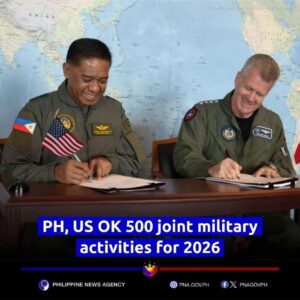
In parallel, the Trump administration strengthened alliances and partnerships across the Indo-Pacific, including with the Philippines, to counterbalance China’s growing influence. Security assistance programs and joint military exercises under EDCA were pivotal in reinforcing the US-Philippine alliance. These actions emphasized US strategic goals in the Asia-Pacific region embodied by the Indo-Pacific Strategy (IPS), seeking to rally regional allies and partners around the IPS.
However, Trump’s leadership style, often described as transactional, and his “America First” philosophy brought uncertainty to smaller US allies like the Philippines. His foreign policy approach prioritized “burden-sharing,” pressing allies to increase their defense spending and contribute more to their own security. This demand for financial commitment often created friction, as it raised questions about the sustainability of the US’ traditional security guarantees to allies. For the Philippines, this approach highlighted the challenges of navigating its security, military and defense reliance on the US amid growing self-reliance pressures.
Moreover, Trump’s transactional nature occasionally undercut strategic coherence. While the US sought to reinforce alliances, his rhetoric and policy decisions sometimes created doubts about the reliability of US commitments. This left allies like the Philippines in a precarious position, weighing the benefits of closer ties with Washington against the risks of becoming entangled in US-China strategic rivalry and competition.
Hence, while Trump’s first-term policies reinforced the US presence in the Indo-Pacific and challenged China’s actions in the SCS, they also exposed vulnerabilities in the US-Philippine alliance, particularly in the context of long-term trust and predictability. This duality shaped the regional security landscape and underscored the complexity of alliance management during an era of great-power competition and rivalry.
Potential Trump 2.0 foreign policy trajectories
In the upcoming second Trump presidency, several potential foreign policy trajectories could emerge that would directly impact the Philippines and the SCS. A second Trump administration is likely to continue robust Fonops and enhance US military presence in the SCS to counter China using the US military bases in the Philippines. The US Navy’s operations near disputed features like Scarborough Shoal and the Second Thomas Shoal could intensify, placing the Philippines at the center of these power plays given its proximity and military alliance obligations.
However, Trump’s well-known transactional approach to foreign policy could resurface, potentially bringing renewed pressure on Manila to shoulder a greater share of defense spending and align more closely with US strategic objectives in the Indo-Pacific. Such demands could impose significant financial strain on the country’s defense budget, which is already stretched thin, and could exacerbate the Philippines’ already contentious and challenging relationship with China. By prioritizing deeper alignment with US strategic priorities, such as countering China in the SCS and broader Indo-Pacific, the Philippines risks further straining its political, diplomatic and economic ties with Beijing. Given China’s status as a key/largest trading partner and investor, heightened tensions could have further economic repercussions, including reduced trade flows, investment pullbacks or retaliatory measures by Beijing, which could undermine the Philippines’ economic growth and stability. Hence, Trump’s transactional leadership style could prompt uncertainty for Marcos Jr.’s presidency and administration, finding itself navigating a challenging geopolitical and economic landscape amid heightened US-China strategic competition and trade tensions.
Conclusion
Indeed, a second Trump administration would likely amplify the US’ strategic competition with China, creating both opportunities and risks for the Philippines. While stronger security ties with Washington could bolster the Philippines’ defense posture, the transactional nature of Trump’s leadership might also demand greater financial and strategic Philippine commitments.
With the SCS remaining a central arena of great-power rivalry, Manila’s ability to skillfully navigate these complexities under a second Trump presidency will be pivotal. The decisions it makes, whether to lean further into its alliance with the US or adopt a more hedging strategy, will shape its defense and foreign policy, and determine its role in the rapidly shifting and evolving Indo-Pacific regional order. Ultimately, the Philippines must weigh the short-term benefits of bolstered security against the long-term risks of entanglement in superpower competition, ensuring that its national security and interests remain at the forefront of its strategic calculus.
Source: The Manila Times
https://www.manilatimes.net/2024/12/21/opinion/columns/a-potential-trump-20-foreign-policy-trajectories-to-ph-and-scs/2025799