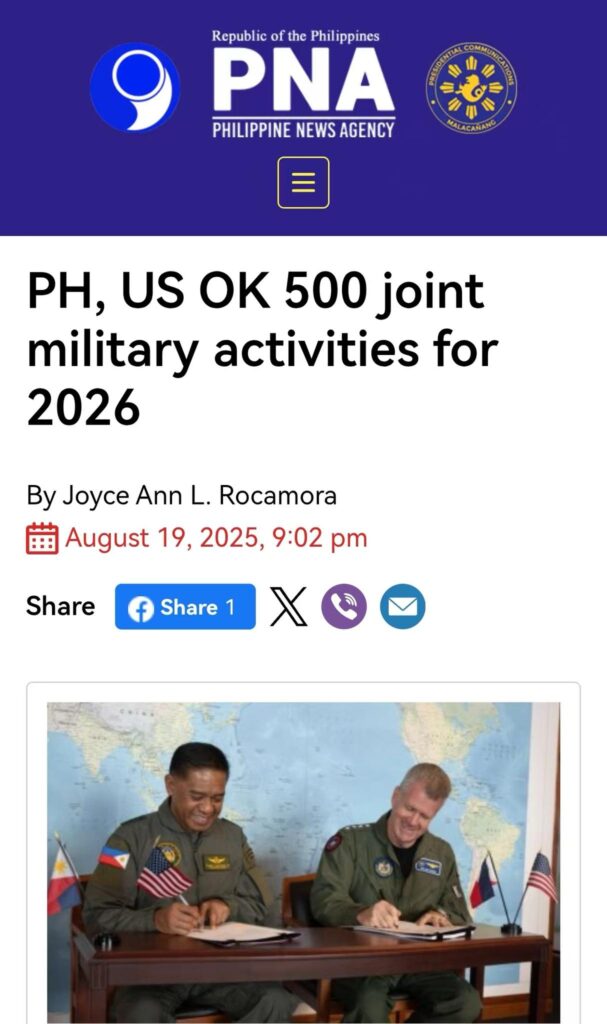

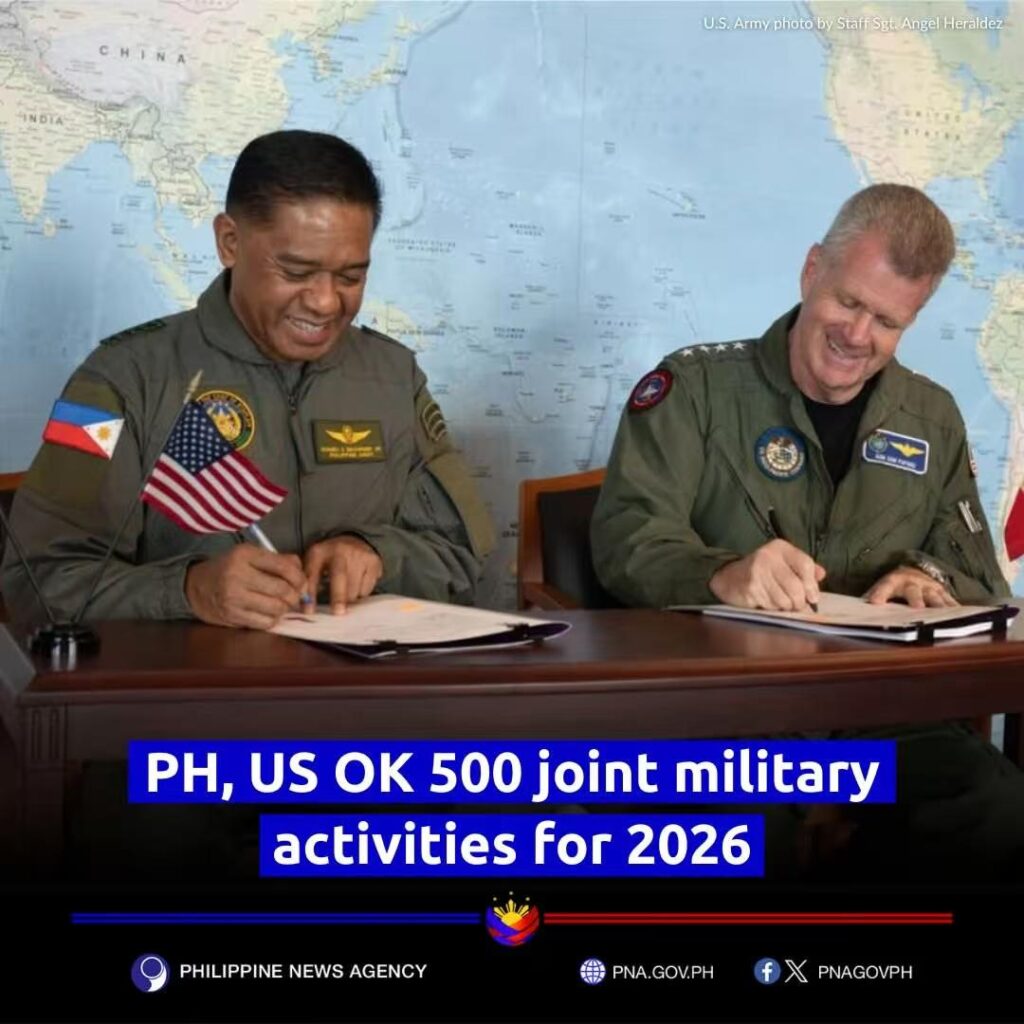
The Philippine government is celebrating the news that it has signed off with Washington on a whopping 500 joint military activities for 2026. Five hundred! If this sounds like an unprecedented display of strength, think again. What it really shows is how far we’ve slid back into strategic dependence, where quantity substitutes for strategy and sovereignty is rented out one exercise at a time.
But here’s the problem: this choreography of dependence does not make the Philippines safer. In fact, the more tightly we bind ourselves to the U.S. military orbit, the greater the risk that our islands become ground zero in a conflict we cannot control.
Each new exercise, each EDCA site upgrade, each missile system rotation pushes the Philippines further into strategic landlord status. We provide the bases, they bring the toys, and in return, we get the privilege of being a potential launchpad, or worse, a battlefield, should U.S.–China tensions boil over. It’s like hosting a permanent house guest who insists on “just staying for training,” but somehow leaves cruise missiles in your garage.
Of course, Beijing is watching all these with eagle eyes. With every “military activity with the U.S. and the collective West inside the Philippine EEZ (exclusive economic zone), the chances of escalation is evident and rising. The Philippines may think it’s sending a message of deterrence, but what it’s really doing is hanging a neon sign over Luzon and Palawan that reads: “First Stop, First Target in Case of War.” Congratulations?
History adds a cruel layer of irony. In 1991, Filipinos celebrated kicking U.S. bases out of Subic and Clark, reclaiming sovereignty after decades of colonial hangover. Fast-forward three decades, and we’re not only letting them back in, we’re clapping as they schedule 500 rehearsals of dependency, the return of U.S. forces under a different label, rotational presence, and EDCA sites.
Call it what you like, but at the end of the day, it still means foreign troops on Philippine soil and Philippine policy tethered to Washington’s strategic whims. We used to reject being U.S.’s “unsinkable aircraft carrier.” Today, we embrace it with smiles and ribbon-cuttings. It’s as if history class was skipped in favor of military propaganda films.
And let’s not forget the people left out of this conversation. Communities in northern Luzon and Palawan have voiced opposition to becoming launchpads for U.S. operations. Local leaders worry about making their towns prime targets, while ordinary citizens wonder what benefits, if any, trickle down from this so-called alliance.
The Hard Truth
The Marcos Jr. administration markets all these as “strengthening the alliance.” In reality, it’s outsourcing defense, renting sovereignty, inviting escalation, and locking us into America’s playbook at precisely the moment when flexibility is most needed. ASEAN neighbors like Vietnam and Malaysia manage to hedge, working with the U.S. where useful, but also engaging China to keep doors open. Manila, in contrast, has chosen to tie itself to Washington’s mast and hope the storm spares us.
So yes, 500 activities are planned. But let’s call it what it is: 500 shades of dependence, 500 reminders that the Philippines is a pawn in someone else’s great-power chessboard. We’re told this makes us stronger. Sarcasm aside, it might just make us the loudest, most obvious target in Asia.
So yes, five hundred military activities with the U.S. for 2026 are coming. Five hundred reminders that sovereignty is negotiable, that history is forgettable, and that when push comes to shove, Washington’s promise to defend us is only as durable as its domestic politics. If past allies from Kabul to the Kurds teach us anything, it’s this: five hundred drills won’t guarantee that the cavalry shows up when it matters most.