
Let us begin with a basic legal reality: a confirmation-of-charges hearing is not a trial. It is a filtering stage. Judges determine whether there are substantial grounds to believe the accused committed the crimes charged, not whether guilt has been proven beyond a reasonable doubt. That distinction is crucial.
Because to critical observers, what unfolded in the Deputy Prosecutor’s presentation did not always resemble a tightly structured evidentiary case. At moments, it felt more like rhetorical architecture, emotionally compelling, morally charged, but legally thin.
Repeated emphasis on “drug lords,” “criminality,” “lawlessness,” and the brutality of the drug trade creates a powerful narrative frame. But narrative framing is NOT legal proof. The danger is that the accused appears not to be on trial for specific, legally defined acts, but for having waged an uncompromising campaign against criminal networks. That is where the line must be drawn.
The core issue is not whether governments have the authority to fight crime. Every sovereign state possesses that duty. Maintaining public order is not merely a political choice; it is a foundational function of sovereignty. Heads of state swear to protect their citizens and preserve internal security. Policing criminality is NOT a crime.
The legal question, therefore, is far narrower and far more precise: Did the campaign cross the threshold into crimes against humanity under the Rome Statute with the so-called 78 victims under the 3 counts of charges?
If the prosecution blurs the distinction between aggressive law enforcement and an unlawful “widespread or systematic attack against a civilian population,” it risks appearing to criminalize governance itself. And that is not just controversial, it is political theater.
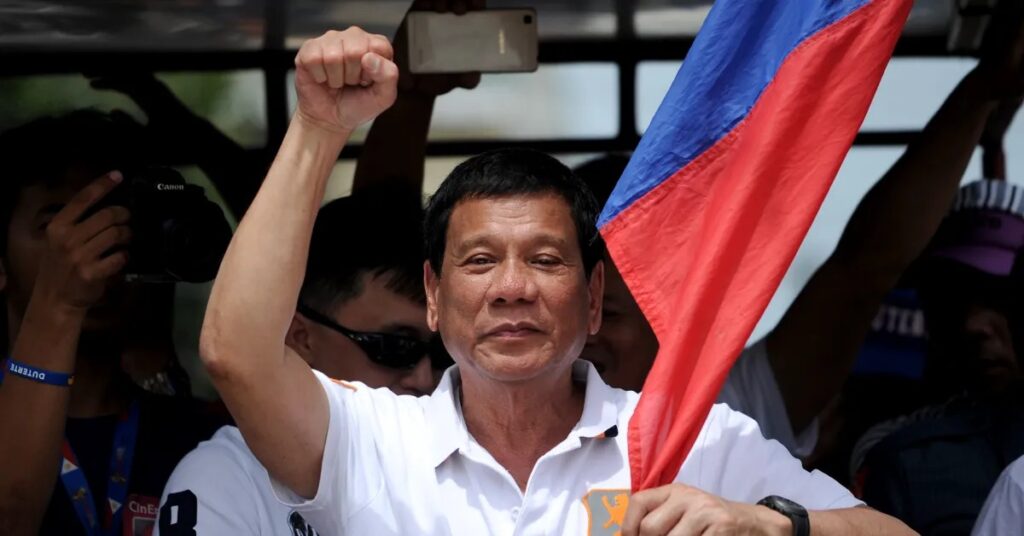
The optics are stark: a former president, elected on a platform of restoring order, detained before an international tribunal (ICC). In many jurisdictions, leaders who pursue harsh anti-crime policies are domestically praised as protectors of public safety. Here, that posture is framed as international criminality. The case of Rodrigo Duterte is indeed an irony.
The prosecution must do more than recount patterns of killings. It must establish the legal architecture required under Article 7 of the Rome Statute:
- A clearly identifiable state or organizational policy
- A widespread or systematic attack
- A nexus between that policy and specific acts
- The accused’s knowing and intentional contribution
Circumstantial evidence is not inherently weak. Courts convict on circumstantial evidence every day, when it is coherent, corroborated, and logically compelling. But circumstantial reasoning cannot substitute for substantiation. It must converge toward inevitability, not merely suggest plausibility.
If the evidentiary chain relies primarily on summaries, second-hand accounts, inferential layering, and emotive testimony without demonstrable connective tissue, one must reasonably ask:
Where is the direct linkage/tissue?
Where are the documented orders?
Where are the institutional directives, incentives, or command structures demonstrating intent?
Command responsibility is NOT automatic liability. Authority alone does not equal guilt. The prosecution must show how power translated into criminal conduct — through orders, encouragement, deliberate tolerance, or conscious failure to prevent and punish.
If the reasoning reduces to: “He was head of state, therefore he is liable,” then the doctrine collapses into presumption rather than proof. That would weaken, not strengthen, international justice.
Another concern is tone. When a prosecutorial presentation leans heavily on moral outrage, evocative storytelling, and emotional amplification of victims’ suffering, it risks drifting from legal argument into moral and political theater. Victim narratives are important. They humanize proceedings. But emotion CANNOT replace evidentiary rigor.
International justice does not survive on moral resonance. It survives on disciplined proof.
The ICC already faces long-standing accusations of selectivity and politicization. Whether fair or not, perception matters. If this case appears rhetorically driven rather than evidentiary anchored, it will reinforce skepticism rather than silence it.
If the Court wishes to fortify its credibility, it must demonstrate prosecutorial precision. Nothing less will suffice.
Because in a case as polarizing as this, the stakes extend beyond one individual. They touch on the legitimacy of international criminal law itself.
International justice cannot be sustained by narrative force alone. It endures only when evidence — not emotion, not politics, not optics — carries the weight.
And in this case, that burden must be unmistakably met by those sitting as ICC judges of this very controversial and polarizing case.