

By: Bruno Falci
Edited by: Luís Indriunas
This article has been translated from Portuguese. We apologize for any unintended translation errors.
Anna Rosario Malindog-Uy details climate crisis, corruption in public works, repression and the influence of the US in the crisis
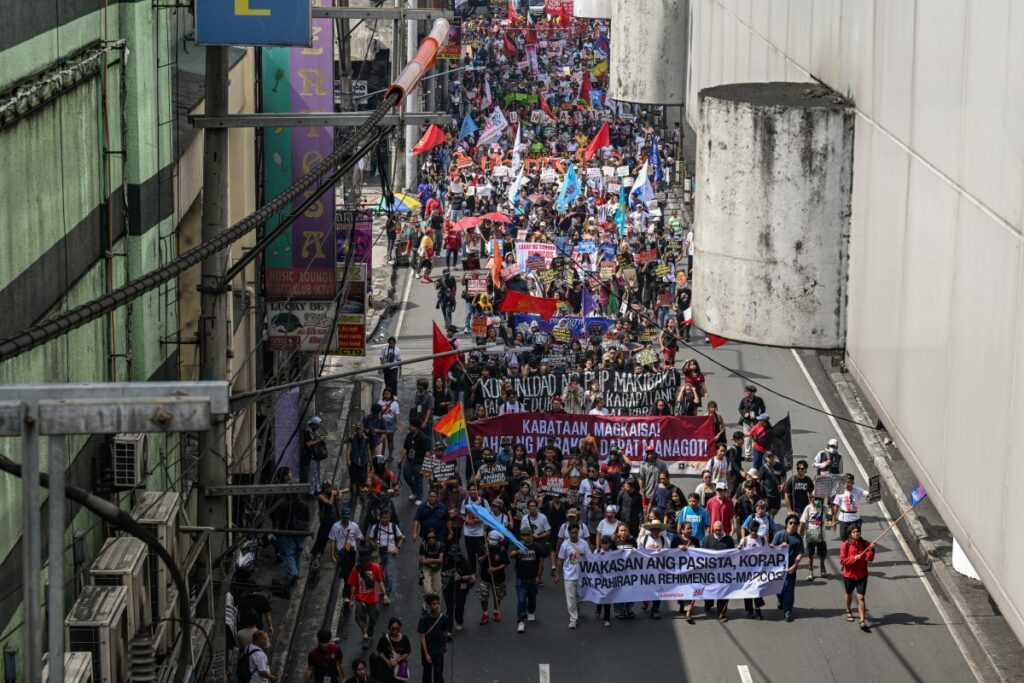
The current wave of social mobilizations in the Philippines is the most intense in a decade, driven by the impact of Typhoon Kalmaegi and the corruption scandal in flood containment works. “It is very important that the Brazilian and Latin American public know what is happening in the Philippines, because it is not an isolated problem. There is massive corruption in the government, involving billions of dollars, especially in flood control projects,” said Anna Rosario Malindog-Uy, researcher and professor of Political Science and International Relations, during an interview with Brasil de Fato at Peking University, where she is doing her postdoctoral studies.
“These projects, many of them, do not even exist. And it was nature itself, through floods and typhoons, that exposed corruption,” details the professor, noting that the crisis also involves human rights violations.
“The Secretary of the Department of Interior and Local Government has publicly stated that anyone who calls for the resignation of President Marcos Jr. will be charged with sedition. This is a violation of the 1987 Constitution, which guarantees freedom of expression and assembly,” Malindog-Uy adds.
She also warns of the strategic control of the United States over Philippine policy: “Foreign policy is totally skewed towards the United States, with strategic military bases, including nine new American bases on Philippine territory. The issue is not national defense, but U.S. strategic interests. If there is a military escalation over Taiwan, our country will be used as a proxy.”
Global warming and natural disaster
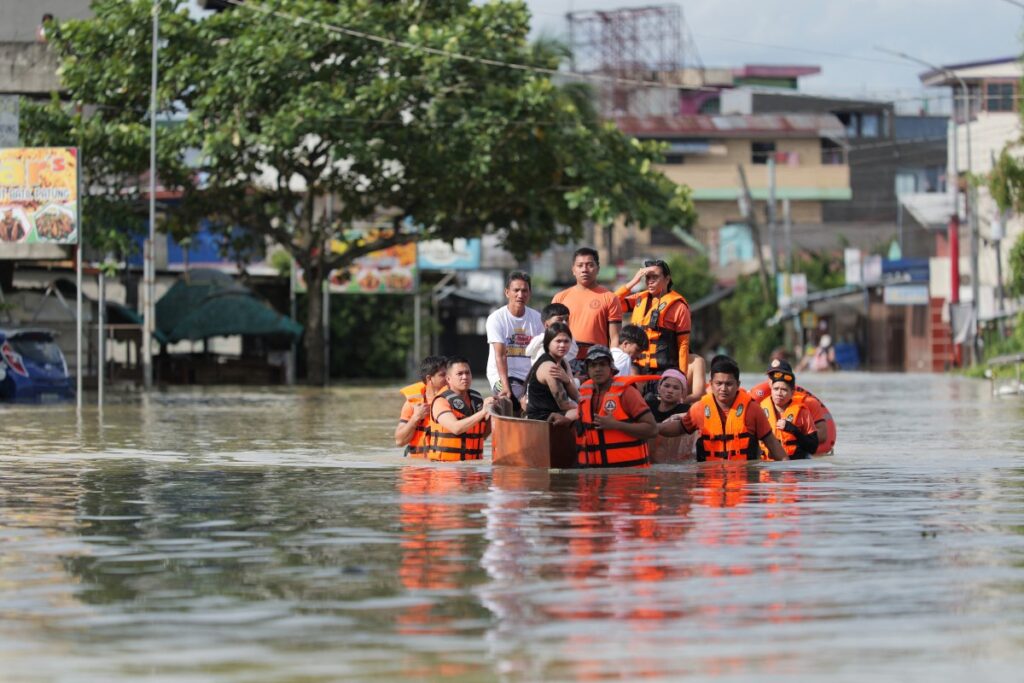
The tragedy caused by Typhoon Kalmaegi highlighted not only the effects of climate change, but also structural flaws and government corruption, being the trigger for the crisis that the Philippines is experiencing. The typhoon left at least 140 dead and destroyed thousands of homes, according to the Philippine National Disaster Risk Reduction and Management Council (NDRRMC).
The professor details how extreme weather events amplify the vulnerability of the Philippines: “The country is constantly inundated by strong storms and typhoons. Only now have we experienced really intense typhoons and storms. It is precisely because of climate change. The problem is very serious. It’s not just a problem of the Philippines or Southeast Asia; It’s a global problem.”
And he points out: “The Philippines, as a country that suffers from numerous typhoons, needs to face this problem and mitigate its impacts to enable sustainable development. However, money earmarked for climate resilience and impact mitigation is diverted or corrupted. Behind this corruption in flood control projects, there is the president, his team and the entire government.”
Scandals in public works and mismanagement
The population’s discontent is not restricted to natural tragedy. The protests reflect anger at corruption in infrastructure projects, which have left communities vulnerable and put pressure on the government to account.
Between 2022 and 2025, the budget allocated to these works exceeded US$ 9 billion, but many were not completed or were executed with low-quality materials. Authorities are already investigating nearly 10,000 works, including levees, drainage systems and river containments.
“The magnitude of the corruption is enormous, involving billions of dollars and implicating the president himself, his son in Congress, the first lady and the entire cabinet, especially in essential public works such as flood control. Many of these works don’t even actually exist, they are ghost projects. And the population is paying with lives and destruction of houses”, details Malindog-Uy.
She also points out that mismanagement goes beyond infrastructure works: “There are also serious problems in sectors such as health and agriculture. Rural road projects and agricultural programs that were supposed to benefit millions of people have been abandoned or poorly executed. The combination of corruption and natural disasters has created an unsustainable situation.”
According to the researcher, these factors fuel the demand for changes in leadership: “The Filipino people are tired. It’s not just about protesting a natural disaster, it’s about demanding accountability from a government that has repeatedly failed to protect its communities.”
Human rights and freedom of expression
The demonstrations also highlight serious human rights violations, according to Malindog-Uy. “This is a human rights issue and a violation of the fundamental rights of Filipinos under the 1987 Constitution. The secretary of the Department of Interior and Local Government publicly stated that anyone who called for Marcos Jr.’s resignation could be charged with sedition or insurrection.”
“What is worrying is that these citizens are exercising their constitutional right to freedom of expression and peaceful assembly. The Constitution makes it clear that Filipinos can express opposition to the government, especially when there is mismanagement,” she stresses.
Malindog-Uy also highlights norms of international law: “In addition to the Constitution, the UN Convention [United Nations] and other international treaties on human rights, to which the Philippines is a signatory, protect these rights. The repression of peaceful demonstrations is not only illegal, but a clear violation of the country’s human rights obligations.”
More than 200 protesters — including students and minors — were arrested for participating in peaceful acts or for expressing criticism of President Marcos Jr. “Many spent days without contact with family or legal assistance, which constitutes a direct violation of the rights guaranteed by the Constitution,” he said. For the researcher, the use of the accusation of sedition to intimidate opponents demonstrates “a clear attempt to criminalize dissent and weaken popular mobilization.”
U.S. influence in the crisis
The influence of the United States in Philippine politics is pointed out by Malindog-Uy as one of the central factors of the current crisis. According to her, Washington has significantly expanded its military presence in the country in recent years, with nine new military bases operating at strategic points in the Philippine territory. “This is not an alliance aimed at national defense,” says the researcher. “It’s part of the U.S. military projection in the Indo-Pacific, especially in the face of tensions in Taiwan.” For her, this presence turns the Philippines into a military outpost, putting the country at risk of being used as a stage for conflict between great powers and deepening the popular perception that the current government has lost autonomy in its foreign policy.
She details the country’s strategic vulnerability: “We are being militarized by the United States, with a large presence of troops and equipment. The Typhoon missile system is located in the north of the country, pointing at Taiwan. In the event of a conflict, our territory would be used in a war that is not ours.”
Comparing it to global conflicts, Malindog-Uy warns: “If we look at Ukraine, we see a country that has become a battlefield in a strategic rivalry. In the Philippines, we may be heading for something similar if there is no change in leadership. We need an independent and neutral foreign policy that protects our interests.”
Protests will continue until the fall of the government
The clamor for a change of leadership in the population is growing and reflects widespread dissatisfaction with the climate crisis, systematic corruption, human rights violations, and external interference by the US.
“There are many Filipinos clamoring for a change of leadership. This means that we want President Marcos Jr. to resign, in a graceful and peaceful way, allowing the country to move forward,” says the researcher.
She stresses the importance of an orderly transition, especially with the Philippines assuming the presidency of ASEAN (Association of Southeast Asian Nations) in 2026. “We want a renewed Philippines, with a good public image. At the moment, internationally, our image is not good: massive corruption, a president with drug addiction and a foreign policy controlled by the United States.”
In addition to corruption and political crises, the Filipino population is also concerned about the issue of drug addiction to President Marcos Jr. According to Anna Rosario, this situation compromises the country’s credibility and governance capacity: “The president faces problems related to cocaine use, which affects his decision-making and the functioning of the government. It is a serious issue, because drug-dependent leaders cannot adequately manage complex crises, such as natural disasters and essential public policies.”
Malindog-Uy warns that the transition is not guaranteed: “It is not yet certain if we will have a more promising future, because Marcos Jr. remains in power and can continue beyond 2028. But the only way to ensure independence, protection of sovereignty and sustainable development is through a change of leadership.” The researcher concludes: “The protests will continue until this change happens.”
Government position
The government of President Ferdinand Marcos Jr. has publicly stated that it is attentive to public concerns and conducts formal investigations into allegations of corruption, especially in the flood containment projects that sparked the protests.
Government officials said Marcos was “monitoring” the mobilizations and supported the right to peaceful protest as long as there was no violence, stressing that the administration had a responsibility to maintain public order and prevent “agitators” from causing unrest.
The president also created an independent commission to investigate irregularities in infrastructure works and promised that people involved in the alleged fraud will be prosecuted before the end of the year, emphasizing that the government will follow due process to present evidence and convictions in court instead of impulsive immediate responses.
On the suspected drug use, the government rejected the accusations as baseless and of a “desperate movement” by the opposition, denying that the president or his family use drugs. Officials cited previous tests that would have come back negative and dismissed the claim as part of an internal political dispute.
Source: Brasil de Fato
https://www.brasildefato.com.br/2025/12/12/protestos-nas-filipinas-continuarao-ate-a-queda-do-governo-afirma-pesquisadora/