
Eighty Years After Fascism’s Defeat: A Call for Stability, Security, and PEACE!
“Eighty years ago, humanity rose from the ashes of war to reclaim peace and dignity. Today, we gather not only to remember, but to recommit to that sacred trust.”
“From battlefields once drenched in sacrifice came the hope of a world at peace. Eight decades on, that hope still calls us to unity, vigilance, and resolve.”
Eighty years ago, humanity stood at the edge of ruin. The Second World War, the deadliest conflict in history, scarred continents, erased cities, and extinguished tens of millions of lives. Yet in the face of unspeakable suffering, people across nations—soldiers, workers, farmers, resistance fighters, and civilians—found the courage to resist. Their collective sacrifices brought about the twin victories we mark today: the Victory Against Fascism and Germany in Europe and the Victory Against Japan and Fascism in Asia. These triumphs were not inevitable; they were won through blood, determination, and solidarity across nations and peoples who recognized that tyranny, aggression, and racial domination threatened the very fabric of civilization.
The 80th anniversary is therefore not only a remembrance of the past but also a solemn reminder for our present. The lessons of 1945 remain painfully relevant. Fascism and militarism rose then by exploiting fear, economic hardship, and nationalist pride. Today, as the world navigates uncertainty—from resurgent geopolitical rivalries to technological disruptions and climate-driven instability—we must remain vigilant against the recurrence of ideologies and policies that undermine human dignity, peace, and security.
The victory of 1945 inaugurated a fragile yet transformative international order. Institutions were built to promote dialogue, cooperation, and collective security. The United Nations, born from the ashes of war, embodied the hope that nations could resolve disputes not through aggression but through international law, sincere and pragmatic talks, and diplomacy. That vision, however, cannot be sustained by memory alone. It requires active stewardship by each generation. The persistence of conflicts, the erosion of trust among nations, and the weaponization of interdependence remind us that peace is never permanent—it must be continually defended and renewed.
For Asia in particular, the Victory Against Japan holds deep resonance. It marked the end of colonial domination and foreign occupation for many people of the region. It gave birth to independence movements and aspirations for sovereign equality. However, it also left enduring scars and unresolved questions that continue to shape our geopolitical landscape today, most notably in contested seas and shifting alliances. To truly honor the sacrifices of those who perished, we must strive not for the repetition of rivalry and division, but for regional stability built on mutual respect, inclusive development, and dialogue.
On this solemn anniversary, we are called not only to mourn but also to reaffirm. To reaffirm that war must never again be the instrument of policy. To reaffirm that security is indivisible, what endangers one nation ultimately endangers all. To reaffirm that peace cannot rest solely on the balance of power but must be rooted in justice, fairness, and cooperation.
The men and women who fought and fell in the 1940s did so in the hope that their children and grandchildren would inherit a world free of fear and domination. Eight decades later, that hope remains our unfinished task. To preserve peace, stability, and security amidst contemporary challenges is not merely a duty to the past; it is the most sacred responsibility we owe to the future.
Conclusion
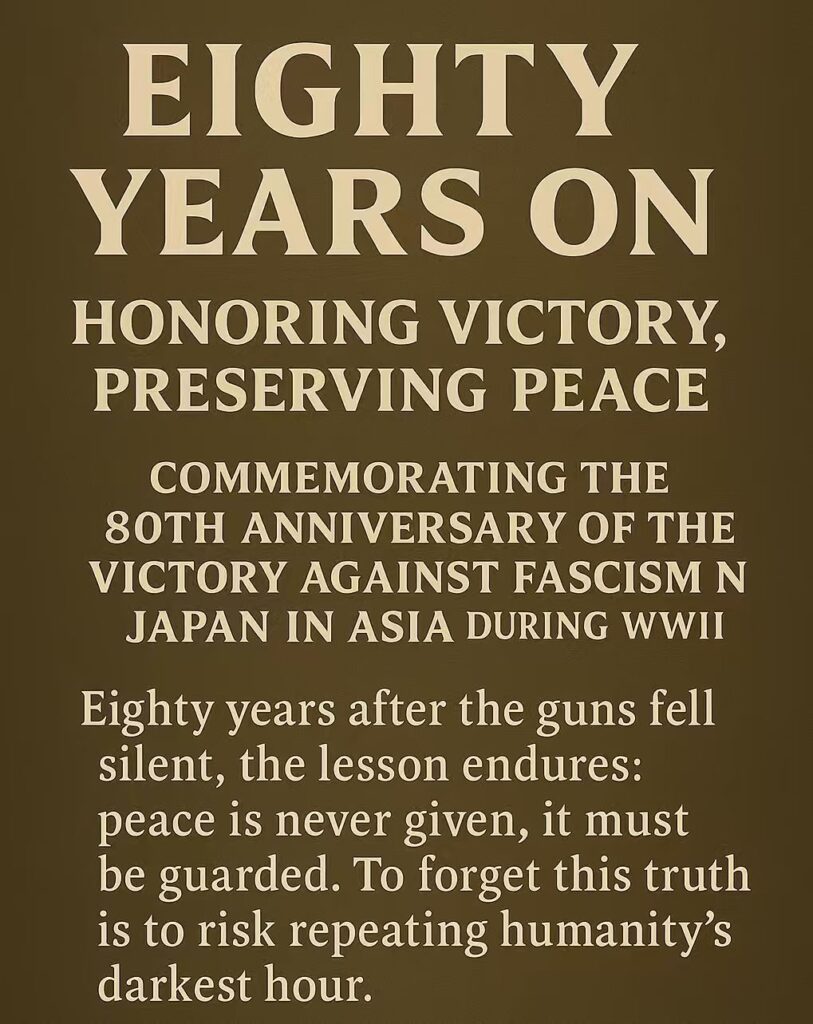
Indeed, eighty years after the guns fell silent, the lesson endures: peace is never given, it must be guarded. To forget this truth is to risk repeating humanity’s darkest hour. The victories of 1945 were written in sacrifice; our duty today is to ensure they are not erased by complacency. Peace is the only victory worth preserving. From the ruins of war came the promise of peace; from today’s uncertainties must come the will to uphold it. History warns, but it is our responsibility to act.