
‘Those who willingly become pawns will inevitably be discarded,’ Chen Xiaodong, foreign vice-minister, tells Boao Forum panel
Meredith Chen in Boao
Published: 5:09pm, 28 Mar 2025Updated: 6:23pm, 28 Mar 2025
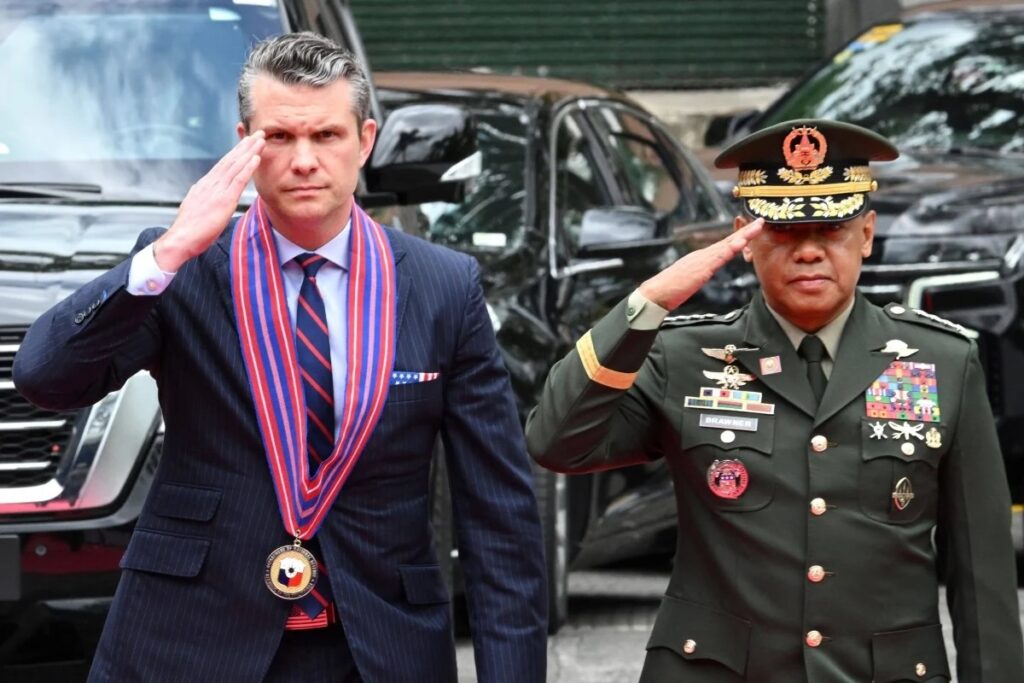
Beijing officials have warned “outside forces” not to meddle in the South China Sea and said disputes should be resolved through direct negotiations – hours before US defence chief Pete Hegseth arrived in the Philippines.
“The South China Sea issue must be resolved without external interference and should not be exploited by outside forces. Those who willingly become pawns will inevitably be discarded,” Chen Xiaodong, China’s vice-minister of foreign affairs, said on Thursday, without naming the US or its treaty ally the Philippines.
Chen’s remarks during a panel discussion at the Boao Forum for Asia – an annual gathering of high-level officials, academics and business executives in southern China – preceded Hegseth’s arrival in Manila on Thursday evening, his first trip to Asia since taking office.
The US Department of Defence said Hegseth would be seeking to advance security objectives with Philippine leaders, and he was expected to meet US and Philippine forces.
On Friday, Hegseth told Philippine President Ferdinand Marcos Jnr that deterrence was needed against China in the region.
“Friends need to stand shoulder to shoulder to deter conflict, to ensure that there is free navigation, whether you call it the South China Sea or the West Philippine Sea,” he said.
Asked to comment on the remarks, Chinese foreign ministry spokesman Guo Jiakun said the US should stop stirring up trouble in the South China Sea and sewing discord in the region.
“We also advise the Philippine side not to rely on the United States to stir up trouble in the South China Sea, let alone trying to provoke military confrontation,” he added.
Beijing claims most of the South China Sea – claims that overlap with those of Malaysia, the Philippines, Vietnam and Brunei. Tensions have escalated over the strategic, resource-rich waterway – especially between Beijing and Manila – and it has become a flashpoint with potential to trigger a conflict.
Liu Zhenmin, who was foreign vice-minister in charge of South China Sea affairs before taking a senior United Nations role in 2017, told the panel that China and Southeast Asian countries needed to learn from the “painful lessons” of the Ukraine conflict.
“Countries in the region can maintain peace in the region if they cherish their own peace – and if the countries in the region rely on a major power to protect you, the risk will always be there. That’s what every Asean country has to seriously consider,” Liu said, adding that Vietnam had previously been invaded by two Western countries.
“I think this is a bitter lesson of the involvement of extraterritorial powers in Southeast Asia.”
A report by Beijing-based think tank the South China Sea Strategic Situation Probing Initiative (SCSPI) said the US used the Philippines as a key hub to expand its Indo-Pacific security network through military cooperation and had significantly strengthened its military presence last year, particularly targeting the South China Sea and Taiwan Strait.
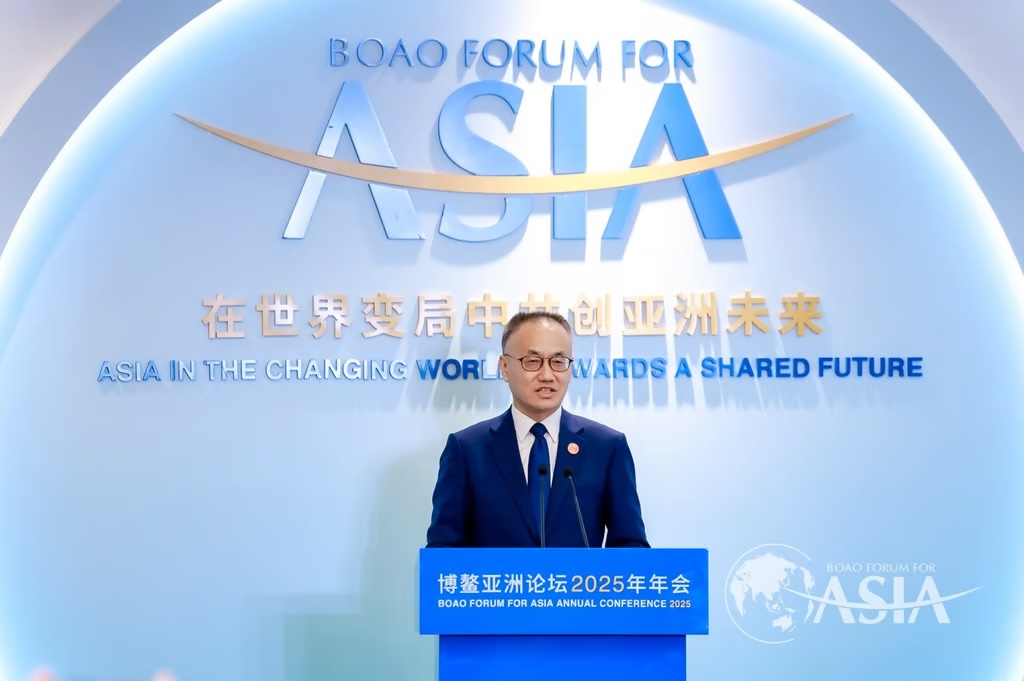
Vice-minister Chen said resolving disagreements through boundary negotiations was “the only correct channel and choice” but it would take time, and temporary boundary arrangements should be in place to manage the maritime situation.
In November, China released a baseline for the disputed Scarborough Shoal, which is known as Huangyan Island in China and Panatag Shoal in the Philippines, drawing protest from Manila.
Beijing has also said it hoped to finish negotiating a code of conduct on the South China Sea – designed to avert confrontations – with the Association of Southeast Asian Nations by next year.
The third reading has been completed, according to Chinese Foreign Minister Wang Yi, but political scientist Zheng Yongnian urged those involved to speed up the process amid the uncertainties of the Donald Trump administration.
“If we don’t reach an agreement on the code of conduct soon, given that Trump’s focus is still on Canada, Mexico and Europe, once his attention shifts to our region, I believe the [negotiation] process might have to start over,” Zheng said on Thursday during the same Boao Forum panel discussion.
Anna Rosario Malindog-Uy, vice-president of the Asian Century Philippines Strategic Studies Institute, a think tank in Manila, said relations between the Philippines and China remained on a “knife’s edge” and would “remain volatile”.
“They are likely to be somewhat diplomatically cordial but operationally confrontational. Dialogue will continue, but maritime skirmishes and rhetorical exchanges will persist,” she said on the sidelines of the forum.
The actions of the US and its allies – including Japan, Australia and increasingly Britain and France – risked militarising the region further and escalating minor incidents into greater military conflict.
She said the build-up in the Philippines, especially near Taiwan, was “akin to preparation for high-end and [high-stakes] conflict scenarios”.
“Manila is threading a high-stakes needle, defending its maritime claims in the South China Sea while becoming a pawn of the US and a geopolitical flashpoint in the US-China rivalry,” she said.
Most Asean states were watching this with measured concern, valuing the US presence for balance while not wanting to be dragged into a great-power confrontation, she said.
A militarised Philippines could undermine Asean centrality and weaken collective diplomacy in dealing with China, she said.
Source: SCMP
https://www.scmp.com/news/china/diplomacy/article/3304255/hegseth-visits-manila-beijing-warns-outsiders-against-meddling-south-china-sea