

IN the unfolding “game of thrones” in the country’s political landscape, on Feb. 5, the House of Representatives impeached Vice President Sara Duterte, a move that will undoubtedly be etched in the annals of Philippine political history. The impeachment, supported by 215 of 306 lawmakers, surpassed the one-third threshold required to proceed.
Interestingly, the first to sign the impeachment complaint was Sandro Marcos, the son of the incumbent president. To cap it all off, the family tag team was completed with the final signature of House Speaker Martin Romualdez, President Marcos’ cousin. This sequence of events paints a vivid picture of the Marcos-Romualdez political alliance’s central role in orchestrating this outcome.
The impeachment trial is set to proceed in the Senate after Congress reconvenes on June 2, 2025, following the midterm elections in May. A two-thirds majority vote (16 out of 24 senators) is required to convict and remove Duterte from office. If convicted, Duterte potentially would be permanently barred from holding any public office, effectively ending any future political aspirations.
Game of thrones
Indeed, the Marcos-Romualdez dynasty’s political chess game strikes again in a masterclass display of power politics that led to the “railroad” impeachment of the vice president, executed with the subtlety of a freight train barreling through a national spectacle. What’s equally astonishing is the sheer audacity of the members of the House who signed off on this political charade, camouflaging and cloaking their actions in the noble language of justice and constitutional duty. They managed to repackage what is glaringly a consolidation of familial power and political ambition into a facade of legitimacy while turning personal agendas into public theater. Indeed, what a despicable political spectacle.
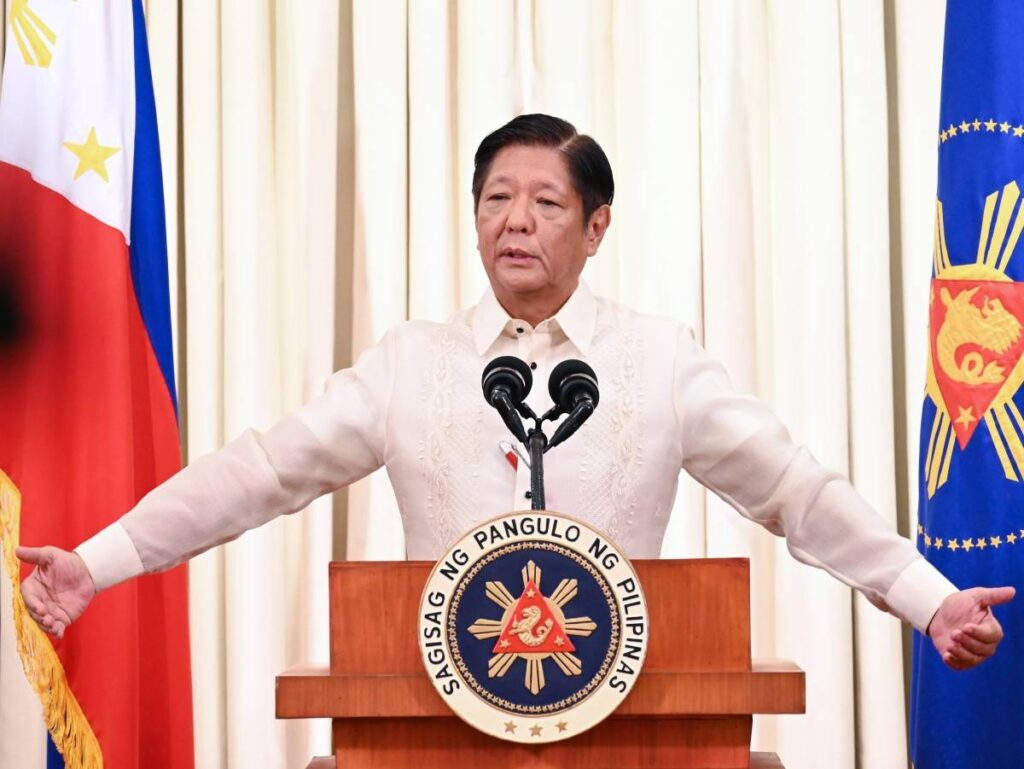
Note that the impeachment proceedings that took place last Wednesday were widely criticized as a rushed and politically charged endeavor, reflecting the culmination of what many see as a carefully coordinated campaign to undermine Sara Duterte’s position. Whether motivated by genuine legal concerns or driven by the intricate web of family rivalries and political power struggles, this “railroaded” impeachment raises pressing questions about the objectivity of legislative processes in the Philippines. The optics of a family-led initiative against a former ally now turned critic underscore the enduring influence of political dynasties, leaving the public to ponder whether this was an act of justice or yet another chapter in the country’s storied tradition of patronage, personality-based, power politics.
The vice president’s impeachment is a depiction of the “game of thrones” of high-stakes political maneuvering, shifting alliances and power struggles in the country’s political landscape. Similarly, the impeachment of Sara Duterte reflects fractures in alliances within the Philippine political elite. Duterte’s impeachment suggests a breach of trust or political expediency by political groups and politicians that once supported the Dutertes. Obviously, politicians see the impeachment as an opportunity to realign power dynamics, positioning themselves for greater influence in the lead-up to upcoming and future elections or political crises, underscoring their political survival in a politically charged and competitive arena.
Likewise, in the “game of thrones” of “Machiavellian realpolitik,” the use and weaponization of the House in the impeachment of the vice president is a deliberate attempt to use legislative power to weaken or purge political adversaries. Hence, the impeachment may significantly influence political dynamics for the next presidential elections in 2028, as political allies and adversaries position themselves for power.
Impeachment as a tool for political power
Moreover, amid the ongoing melodrama in the Philippine political theater, it is essential to recognize that impeachment in the country is less about legal accountability and more of a reflection of political maneuvering. Cloaked in the language of law, justice and accountability, it remains a demonstration of political power, dictated by the alignments and interests of those controlling the legislature. The process, as designed under the 1987 Constitution, highlights a system entrenched in factionalism and self-serving agendas. Instead of being a genuine mechanism for accountability, impeachment often underscores the dysfunctions of a political culture stuck in cycles of regression.
In the highly partisan Philippine political landscape, impeachment decisions rarely hinge on the merits of the complaint. Strong cases can be dismissed if they threaten the interests of those in power. Conversely, even the flimsiest cases, lacking substance, evidence or merit, can be railroaded through with ease if they serve the prevailing political agenda of those at the helm of power. This reflects the pervasive influence of partisan, patronage-driven, personality-based politics that prioritize political loyalty and political maneuvering.
Ultimately, impeachment serves as a weapon to dismantle opposition or shield allies, devolving into a spectacle driven by the prevailing political alignments. Rather than fostering accountability, it frequently consolidates power or weakens rivals, further entrenching the culture of partisanship and power plays that dominate the Philippine political arena. Justice is often sidelined, replaced by the relentless pursuit of political advantage.
Conclusion
The impeachment of Vice President Sara Duterte mirrors a “Game of Thrones” scenario, where loyalty, betrayal and power dynamics are in constant flux. This political conflict, akin to a battlefield of shifting alliances and cutthroat political maneuvers and power plays, could result in renewed coalitions, deeper instability or even reshaping the Philippine political landscape. As these dynamics unfold, they will significantly impact the midterm May 2025 and 2028 presidential elections, and the broader trajectory of governance in the country.
While impeachment theoretically serves as a constitutional safeguard against abuses of power, in practice, it is often dictated by political interests rather than legal merits. The fate of impeached officials hinges not on the strength of evidence but on the calculations of those in power, public sentiment and the fragility of alliances. This reality underscores impeachment as less a legal proceeding and more of political spectacle.
Indeed, the Filipino public is at a pivotal crossroads, tasked with navigating this turbulent political theater with discernment and wisdom while steadfastly prioritizing the nation’s best interest. The extent to which this moment either entrenches existing dysfunctions or sparks meaningful change will hinge on the collective resolve of the Filipino people to transcend political factionalism, and power plays and maneuvering by those at the helm of power, guided by a genuine commitment to the country’s true interests, welfare and future.
Source: The Manila Times
https://www.manilatimes.net/2025/02/08/opinion/columns/power-plays-and-betrayals-the-game-of-thrones-and-vp-impeachment/2052135