
THE Philippines stands at a critical juncture, facing both internal and external threats to its sovereignty, governance, national dignity and integrity. Under the administration of President Ferdinand Marcos Jr., the country has been plunged into deep political and economic turmoil. Among the most pressing issues include, but not limited to, Marcos’ cooperation with the International Criminal Court (ICC) despite the fact that it has no jurisdiction over the Philippines since March 2019, the alleged rampant corruption under his administration and the worsening economic crisis as exemplified by soaring prices, food insecurity and unemployment, among others. These concerns raise fundamental questions about leadership, governance and national sovereignty.
Violation of PH sovereignty
One of the most alarming developments under Marcos Jr.’s leadership is his administration’s cooperation with the ICC to prosecute former president Rodrigo Duterte. This has raised serious concerns about the Philippines’ sovereignty. As per the principles of international law, the ICC no longer has jurisdiction over the Philippines since the latter withdrew from the treaty, effective in March 2019.
Yet, Marcos has effectively compromised national sovereignty by cooperating with the ICC in the case against a bona fide citizen and former head of state. Critics argue that this move constitutes a betrayal of the nation’s autonomy and sovereignty, as it subjects the country’s legal jurisdiction to an external tribunal. The ICC arrest of Duterte is viewed by the majority, if not the entire Philippines, as tantamount to state-sanctioned abduction or kidnapping. This act not only challenges Philippine sovereignty but also raises constitutional concerns. The Philippine Constitution explicitly guarantees protection against foreign interference and upholds the fundamental rights of all citizens. In this context, deference to the ICC has undermined the nation’s sovereignty and ability to govern its internal affairs independently.
Article 59 of the Rome Statute — which governs the procedures that must be followed when a person is arrested in a state that is a party to the Statute and is subject to an ICC warrant, and ensures that the rights of the accused are upheld in the state where the arrest takes place before they are transferred to the ICC — was violated as far as the arrest of Duterte is concerned.
Note that if the ICC is to arrest any individual in a country like the Philippines, compliance with Article 59 is critical. Any deviation from this process would raise concerns about the legality and legitimacy of the arrest. Some of the key provisions of Article 59 that were violated in the arrest of former president Duterte include:
a) When a person is arrested in a state that is a party to the ICC, the state must bring them before a judicial authority without delay. Without a domestic court review (as required by Article 59), Duterte’s ICC arrest was arbitrary, illegal and unconstitutional.
b) The judicial authority (local court) must determine whether the warrant of arrest was properly issued under Article 58 and whether the accused’s rights have been violated.
c) If procedural irregularities or rights violations are found, the person may not be immediately transferred to ICC custody.
Indeed, the arrest and transfer of former president Duterte to the ICC detention facility at The Hague, the Netherlands, represent a glaring violation of his fundamental rights. The entire process was marred by the absence of due process, as he was neither provided timely legal aid nor adequately informed of the charges against him and of his rights. Furthermore, the transfer procedures failed to adhere to both Philippine domestic law and international legal standards, raising serious concerns about procedural integrity. Adding to the gravity of the situation, Duterte, who will turn 80 years old on March 28, was subjected to inhumane treatment that disregarded his age and his contributions to the country as a former head of state.
Beyond these legal and humanitarian concerns, the enforcement of the ICC arrest warrant in the Philippines, particularly under Article 59, raises profound legal, constitutional and sovereignty issues. The Marcos administration’s decision to comply with the ICC not only contravened the country’s legal framework but also amounted to a direct affront to national sovereignty. By surrendering a Filipino citizen and a former head of state to an external tribunal that no longer holds jurisdiction over the Philippines, Marcos effectively allowed foreign interference in the nation’s internal affairs. These precedents challenge the fundamental principle of self-determination and call into question Marcos’ commitment to upholding Philippine sovereignty and independence in the face of international pressure. This has set a dangerous precedent where foreign entities can dictate the country’s legal affairs. This weakens the nation’s ability to govern itself and opens the door for further external manipulation.
Corruption and worsening economic crisis
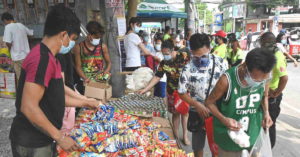
Moreover, while Marcos aligns himself with the ICC’s controversial actions, his own administration is riddled with alleged massive corruption, governance failures and economic problems. Beyond the political chaos, ordinary Filipinos are suffering from an economy that is spiraling downward. Under Marcos’ leadership, the cost of living has soared, inflation is high, food insecurity has worsened and unemployment remains a persistent issue. For instance, the Philippines has been hit by record-high inflation, making basic commodities unaffordable for the majority of Filipinos. Prices of rice, vegetables and essential goods have skyrocketed, with no effective government intervention to control market manipulation and hoarding by powerful cartels.
Despite its agricultural potential, the Philippines continues to grapple with food insecurity, reflecting systemic inefficiencies in the sector. The country remains highly reliant on food imports, exacerbating economic vulnerabilities, contributing to trade imbalances and driving up the cost of living for ordinary Filipinos.
Furthermore, the country’s broader economic landscape presents additional challenges. Job creation remains sluggish, with limited opportunities for local employment, partly due to the slow influx of foreign direct investments. Concerns over governance, regulatory instability and domestic political turmoil have dampened investor confidence. Meanwhile, the country’s foreign debt continues to rise at an unprecedented rate, raising questions about long-term economic sustainability and fiscal management. Without decisive policy interventions, these interconnected issues threaten to deepen economic distress and widen social inequalities and unrest.
Conclusion: Call to action
Filipinos deserve better than what’s happening in the country at the moment. The government of Marcos Jr. must be held accountable. The Filipino people must remain vigilant, demand accountability, and uphold the dignity and sovereignty of the republic. With all these crises unfolding, the Filipino people must unite to demand justice, good governance and national dignity.
The Filipino spirit is strong, and history has shown that the nation can rise above oppression and injustice. However, this requires vigilance, unity and a firm commitment to national sovereignty.
Filipinos must remember that their future should not be dictated by external forces or corrupt leaders but by the collective will of the people. The fight for justice, good governance, national dignity and sovereignty must continue and persist. In this struggle, we hold on to the belief that, indeed, God saves the Philippines.
Source: The Manila Times
https://www.manilatimes.net/2025/03/22/opinion/columns/god-save-the-philippines-the-struggle-for-sovereignty-justice-and-the-battle-against-corruption/2077724