
If Philippine politics is entering a season of intensified rivalry, the economy is entering a season of quiet but dangerous strain. The headline numbers do not yet tell a story of collapse, but they do tell a story of fragility. Growth has underperformed expectations; jobs remain insecure, inflation may be softer on paper, but the cost of living continues to bite, and the country remains deeply vulnerable to external shocks, especially energy shocks. In short, this is an economy that may look stable from a distance but feels unstable on the ground.
That distinction matters. Governments often hide behind macroeconomic language, growth projections, budget expansions, monetary adjustments, and inflation targets, as though numbers alone can settle public anxiety. But the political economy of the Philippines is not measured only by data released in Manila. It is measured in wet markets, in electricity bills, in transport fares, in unemployment, and in the daily calculation of families deciding what to postpone, cut back, or sacrifice. An economy can be technically growing while socially deteriorating.
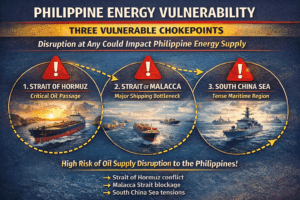
Rising fuel prices are one of the clearest examples. Energy costs do not remain in the energy sector. They spread everywhere: food distribution, commuting, manufacturing, electricity, and basic household expenses. Once fuel rises, the entire economy absorbs the shock. The Philippines is particularly exposed because it is an import-dependent economy with limited buffers against global disruptions. That means every overseas conflict, every spike in oil prices, and every geopolitical crisis eventually arrives in Filipino households disguised as a more expensive tricycle ride, a smaller grocery basket, or a higher monthly bill.
This is where economic governance becomes a political test. A state budget may be larger, but that does not automatically mean governance is stronger. Public spending only builds legitimacy when it is credible, efficient, and visibly connected to public welfare. When budget controversies emerge, confidence suffers twice: first, because people suspect misuse; and second, because they begin to doubt whether the government is capable of prioritizing correctly at a time of stress. In a fragile economy, trust is not a moral luxury. It is an economic asset.
The central bank can cut rates. Officials can promise recovery. Growth can rebound modestly. But none of that changes the deeper question: recovery for whom? If wage earners, commuters, informal workers, and low-income households continue to experience economic life as a sequence of pressures rather than improvements, then official optimism becomes politically dangerous. It starts to sound less like reassurance and more like denial.
Conclusion
This is the central economic issue confronting the Philippines today: not merely whether growth will return, but whether the state can convert economic policy into social relief and public confidence. Without that conversion, the country faces a double crisis. Politics becomes more unstable because economics feels unjust, and economics becomes more fragile because politics lacks credibility. And that is precisely where the Philippines now stands.
Source: The Lobbyist
https://www.thelobbyist.biz/perspectives/article-details/prime%20insight/growth-without-relief-the-political-economy-of-a-country-under-strain