
The Philippines has become the geopolitical fulcrum or crux of the Indo-Pacific, the critical midpoint of the First Island Chain, and the unavoidable terrain on which the United States and China now rehearse power, deterrence, and narratives of legitimacy. Yet while Manila’s strategic value has never been higher, its diplomacy under the current Marcos Jr. administration suggests a country behaving as if it were petitioning for relevance, rather than sitting at the very center of a historic strategic competition. The tragedy is not its geography, but its failure to negotiate like a state that knows what its geography is worth.
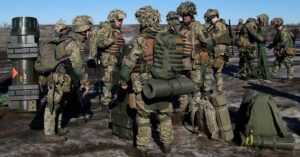
The South China Sea (SCS), long one of Asia’s most volatile flashpoints, has become the primary theater in which great-power rivalry intersects with national sovereignty and the livelihoods of Filipinos. Crucial to this is the US’s reentry as the Philippines’ security patron. Through EDCA expansion, joint patrols and military exercises, logistics agreements, and defense-military technology-sharing frameworks, Washington regained the forward access it lost in 1991, this time without the political liability of formal bases. Luzon has become the operational staging ground for any Taiwan contingency; Palawan is the maritime gateway to the Spratlys. The Philippines today is not simply a US ally; it is the indispensable launchpad of U.S. military posturing and strategy in the Indo-Pacific.
Indeed, Washington is playing a sophisticated game. By framing the Philippines as a victim and a champion of UNCLOS and the 2016 arbitral award, the U.S. secures diplomatic legitimacy for its Indo-Pacific strategy and a justification to intervene in the SCS dispute, despite not being a party. Manila provides both geographic advantage and narrative—an alliance manager’s dream. Meanwhile, joint patrols, interoperability exercises, rotational deployments, cyber cooperation, and intelligence integration deepen U.S. military entanglement at minimal cost to Washington.
But here lies the uncomfortable truth: The Philippines is giving far more than it is receiving. A strategically confident state would leverage its central position—its geography, its alliance value, and its symbolic weight—to demand quid pro quos (reciprocal exchanges): Yet Manila has behaved less like a bargaining peer and more like an eager subordinate. EDCA sites were offered without extracting first-order concessions. Joint patrols and military exercises were agreed upon without a detailed economic package. Alignment with the U.S. Indo-Pacific strategy was echoed, but it was not leveraged for trade, infrastructure, or industrial policy. Hence, the Philippines becomes a frontline state without frontline benefits.
Conclusion:
If Manila continues down its current path—over-aligning with the U.S., under-leveraging its value, and reacting to China rather than shaping the terms of engagement—it will wake up soon to find that it has become the battleground everyone plans around, but the beneficiary of none. The Philippines must negotiate like the pivotal state it is, not the pawn others presume it to be.
Source: The Lobbyist
https://www.thelobbyist.biz/perspectives/article-details/prime%20insight/how-the-philippines-became-americas-strategic-linchpin-and-why-manila-is-bargaining-like-a-bystander-not-a-middle-power