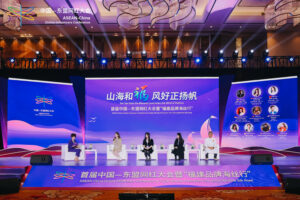

On September 23, I had the privilege of speaking at the 2025 Belt and Road Media Workshop Sharing Symposium: Exploring Guizhou, where 24 media practitioners from 20 countries gathered. It was a demonstration of how shared stories and experiences can strengthen the Belt and Road vision of connectivity, cooperation, and common prosperity.
Guizhou, often known as one of China’s most breathtaking provinces, revealed itself to us not only through its natural wonders but also through its role as a symbol of balanced and sustainable development. Our journey through Guizhou showcased a province that has seamlessly woven together tradition, modernity, and innovation—lessons that resonate deeply across Asia.
We began with the Moutai Factory and the Museum of China Liquor Culture, where we saw how cultural heritage can be preserved while fostering innovation and industry. This is a microcosm of the Belt and Road Initiative’s philosophy: that development need not erase tradition, but can instead elevate it in ways that engage both domestic pride and global curiosity.
Nature, too, tells part of Guizhou’s story. The Huangguoshu Waterfall, Asia’s largest, reminded us that natural wonders are not only treasures to behold but also responsibilities to protect. In the context of Belt and Road cooperation, sustainability is as important as connectivity. Guizhou demonstrates how environmental preservation can coexist with ambitious development goals.
The Huajiang Canyon Bridge, the world’s tallest bridge, represents something larger than an engineering achievement. It embodies the Belt and Road spirit of building connections where none seemed possible before. Just as this bridge links communities across dramatic terrain, the Belt and Road Initiative seeks to link nations across divides —geographical, economic, and cultural —through infrastructure, trade, and dialogue.
Guizhou’s industrial dynamism adds yet another dimension. At China GPC, Geely, and other leading enterprises, we have witnessed a thriving ecosystem of innovation that is reshaping the automotive, big data technologies, and advanced manufacturing sectors. These enterprises demonstrate that Belt and Road cooperation extends beyond roads, ports, and bridges. It is also about knowledge exchange, technological advancement, and people-centered industries.
Moreover, the spirit of the people of Guizhou embodies a confidence rooted in heritage and an openness to the future. This is precisely the balance needed for BRI cooperation to succeed: respect for local culture paired with a shared vision of global progress.
Indeed, Guizhou is more than a province of natural beauty and industrial promise. It is a living bridge between tradition and innovation, between local communities and the global stage, and between the aspirations of the BRI and the everyday lives of people across Asia.
For the Philippines and our neighbors in Southeast Asia, the lessons from Guizhou are both practical and symbolic. They remind us that cooperation is not a zero-sum game. By learning from each other’s strengths, respecting each other’s cultures, and working together toward inclusive development, we can build not only bridges of steel but also bridges of trust and shared destiny.
Source: The Lobbyist
https://www.thelobbyist.biz/perspectives/article-details/prime%20insight/guizhou-a-living-bridge-of-tradition-innovation-and-belt-and-road-cooperation