
Today, 12 July 2025, marks the 9th anniversary of the 2016 Arbitral Award in the Philippines v. China case. It is crucial to dispel widespread misconceptions:
- Not a UN Ruling: The decision was not issued by the United Nations (UN), nor did any UN body sanction it. It came from an ad hoc tribunal constituted under Annex VII of the United Nations Convention on the Law of the Sea (UNCLOS).
- Role of the PCA: The Permanent Court of Arbitration (PCA) merely served an administrative role, providing registry and secretariat services. It did not act as the arbitral tribunal itself and is not a UN institution.
- Not the ICJ: The case was not decided by the International Court of Justice (ICJ), which is the UN’s principal judicial organ.
- No UN Endorsement: The ruling has not been endorsed, adopted, or enforced by the UN General Assembly, Security Council, or Secretary-General.
- Legal Scope and Limitations: The ruling binds only the parties involved (Philippines and China) under Article 296 of UNCLOS, and critically, UNCLOS lacks any enforcement mechanism. China outright and on the onset rejected the tribunal’s jurisdiction and ruling.
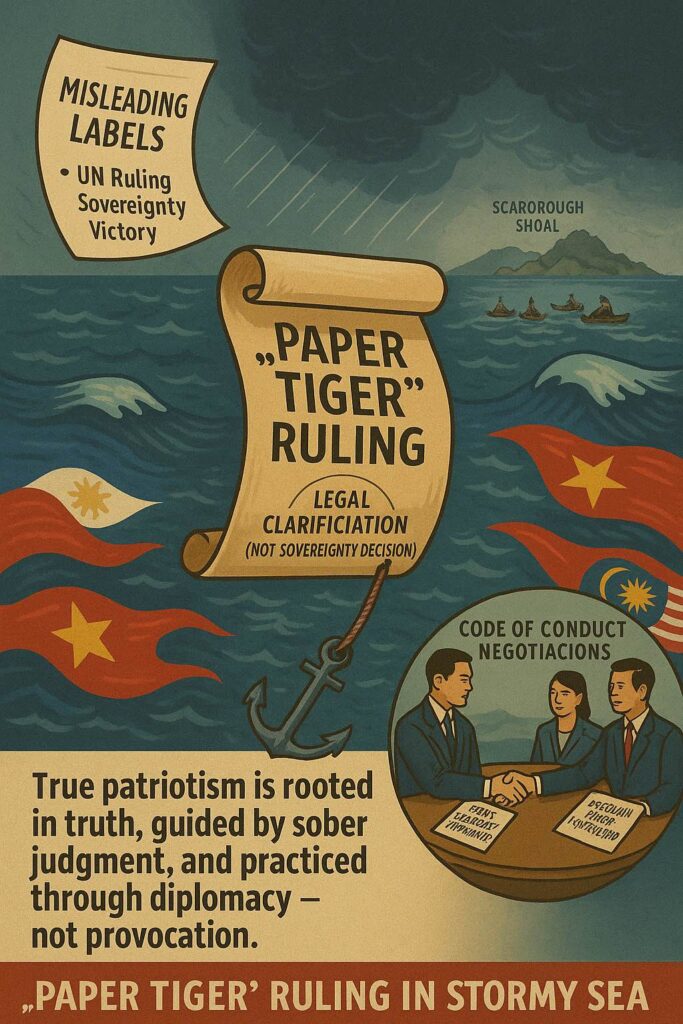
- Misleading Labels: Describing the ruling as “UN-backed” or a “UN ruling” is legally inaccurate, politically misleading, deceptive, and dishonest. While UNCLOS is often called a “UN convention,” enforcement of its provisions depends less on law and more on geopolitical power and diplomacy.
In short, the 2016 arbitral ruling, for some, may be a milestone in maritime law interpretation; however, it is not a UN decision, lacks an enforcement arm, and remains a matter of debate and contestation on legal clarity versus political reality.
What the 2016 Arbitral Ruling Did Not Do And Why That Matters?
The 2016 SCS Arbitral Tribunal did not rule on territorial sovereignty. It did not determine ownership of any land features, such as the Spratly Islands or Scarborough Shoal, claimed by the Philippines, China, Vietnam, or Malaysia. Likewise, it did not draw or delimit maritime boundaries between states. Instead, the ruling focused exclusively on maritime entitlements under UNCLOS.
It clarified the status of specific maritime features (islands, rocks, reefs) and their corresponding entitlements: whether they generate 200-nautical-mile Exclusive Economic Zones (EEZs), 12-nautical-mile territorial seas, or none at all. Likewise, the tribunal invalidated China’s “nine-dash line”, stating it had no legal basis under UNCLOS. It recognized that Scarborough Shoal is a rock, not an island, and therefore cannot generate an EEZ and affirmed the traditional fishing rights of Filipino, Chinese, and Vietnamese fishers in the waters around the shoal.
Critically, UNCLOS has no jurisdiction over questions of sovereignty or territorial title. Its authority is limited to governing maritime zones, navigation rights, environmental protection, and resource entitlements, not determining who owns what land. This often-misunderstood distinction is key.
Disputes over territorial sovereignty, like who owns the Spratlys or Scarborough, must be resolved under general international law, not UNCLOS. They are typically handled through bilateral negotiations, treaties, or brought before the International Court of Justice (ICJ).
Bottom line, the 2016 arbitral award was not a ruling on ownership but a legal clarification of maritime rights under UNCLOS. Misrepresenting it as a “sovereignty victory” or a definitive ruling on who owns what land distorts its legal meaning and undermines responsible public discourse.
Clarifying the Limits
A proper understanding of the legal scope and constraints of the 2016 Arbitral Ruling is essential to counter the growing trend of its politicization and misrepresentation. Unfortunately, some actors, particularly within the Philippines, have persistently miscast the ruling as a sovereignty victory, when in fact it is no such thing.
The tribunal in Philippines v. China did not adjudicate questions of territorial sovereignty or ownership over any land features in the SCS. It did not and could not rule on who owns Scarborough Shoal, the Spratlys, or any other contested feature. This is not a loophole nor a flaw in the ruling; it was a conscious legal decision grounded in the tribunal’s jurisdictional limits under Annex VII of UNCLOS.
Significantly, the tribunal explicitly declined to comment on sovereignty claims by China or any other claimant state. That restraint reflects the foundational reality: UNCLOS is a maritime treaty, not a mechanism for settling territorial disputes over land. It governs maritime rights, not territorial titles.
By overselling the award as a territorial or sovereignty triumph, certain narratives distort its legal precision and geopolitical function. The ruling clarified maritime entitlements and invalidated the so-called nine-dash line, but it did not resolve sovereignty questions, nor was it ever intended to.
In an age of weaponized narratives, acknowledging the actual legal contours of the 2016 ruling is not just an academic exercise; it is a necessary antidote to misinformation, legal overreach, and strategic and geopolitical manipulation coming from external interference and external forces not party to the dispute.
My Take on this Issue?: Turning Conflict into Cooperation: A Strategic Reframe of the SCS
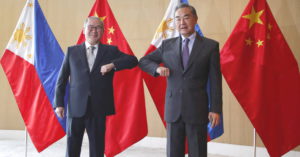
Having studied the South China Sea (SCS) dispute for nearly a decade, my position remains unchanged: the Philippines and China are neighbors, an immutable geopolitical reality. As with any neighbors, differences and conflicting interests are inevitable. What matters most is how these differences are addressed with maturity, pragmatism, and diplomacy.
Rather than fixating on vilifying or isolating China, an approach that risks further escalation, the Philippines would do better to pursue a constructive, cooperative path. This includes:
- Pushing for the early conclusion of the ASEAN-China Code of Conduct (COC) to manage tensions and foster regional stability.
- Developing a strategic partnership with China, centered on joint exploration and development of maritime resources, fishing, oil, and gas, in the disputed areas.
- Promoting shared infrastructure and coordinated investments, transforming friction into mutual gain.
This win-win framework transcends zero-sum thinking and offers a forward-looking strategy for both Filipinos and Chinese to benefit from peace, stability, and economic cooperation.
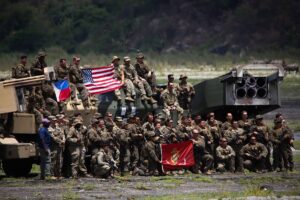
At its core, the issue is not about choosing sides in a great power rivalry, but about choosing strategic autonomy and regional dialogue/negotiation over external manipulation. The Philippines must ask itself: Does it want practical cooperation with its neighbors or to be drawn into confrontation as a proxy of foreign “superpower” strategic interests?
Ultimately, diplomacy, not provocation, must be the guiding principle. A balanced approach, anchored in international law, regional multilateralism, and robust bilateral and multilateral diplomacy through ASEAN, offers the best chance for a peaceful and prosperous future in the South China Sea.
Conclusion: Patriotism Rooted in Prudence: Upholding the Philippines’ Claims through Diplomacy
Standing up for what rightfully belongs to the Philippines is unquestionably an act of patriotism. But true patriotism is not blind; it is anchored in truth, grounded in realities on the ground, and guided by sober judgment. Anything less risks becoming self-deception that may ultimately harm the nation more than help it.
In asserting its claims in the South China Sea (SCS), the Philippines must pursue a path of peaceful and pragmatic diplomacy. This is not a retreat from principle, but a strategic assertion of sovereignty through dialogue, negotiation, and international engagement. Waging battles without considering the geopolitical and security consequences risks placing the country in a dangerous and unsustainable position, one that could cost not only resources, but lives.
The challenge is not just about the Philippines’ differences with China, but also with other claimant states. Hence, the solution must be inclusive and regionally grounded, engaging all stakeholders through peaceful conflict resolution mechanisms and diplomatic channels.
After all, diplomacy is not weakness. It is a sophisticated expression of sovereignty, a powerful tool to advance national interests without the hazards of confrontation. It is through such deliberate, balanced, and well-informed diplomacy that the Philippines can best protect its claims, its people, and its future.