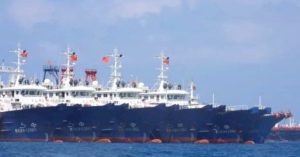

THE intensifying US military presence and strategic positioning in the South China Sea (SCS), particularly in the Philippines, have significant implications for regional stability. The expansion of the Enhanced Defense Cooperation Agreement between the US and the Philippines, including the four new bases positioned near sensitive areas like the Taiwan Strait and South China Sea, reflects a growing commitment to US-Philippines defense ties under President Ferdinand Marcos Jr. The pre-positioning of US military assets and continuous deployments of troops underscores this alliance, as does the recent deployment of the US Typhon missile system in Laoag, Ilocos Norte. Capable of launching missiles such as the Standard Missile 6 (SM-6) and Tomahawk with ranges up to 1,600 kilometers, this system is strategically positioned close to both the SCS and Taiwan Strait, raising regional anxiety.
Further reinforcing this shift, the Armed Forces of the Philippines has expressed interest in procuring the Typhon Mid-Range Capability missile system. Defense Secretary Gilberto Teodoro Jr. also said, “We do indeed plan to acquire capabilities of such sort,” and the system “increases deterrence.” He added, “We will not compromise with our right to acquire any such kind of capabilities in the future within our territory.” This is despite China’s and Russia’s strong opposition.
Undoubtedly, the continuous US military buildup in the Philippines and its persistent presence in the SCS through freedom of navigation operations aimed at challenging China risks escalating military tensions in the region. Positioned as a key US ally, the Philippines finds itself at the center of this strategic rivalry, potentially becoming a proxy battleground between the US and China. The close proximity of Chinese and US military assets increases the likelihood of accidental encounters or miscalculations, which could rapidly escalate into larger confrontations.
This dynamic creates a classic security dilemma where defensive actions by one side are perceived as aggressive by the other, leading to a cycle of military buildup and heightened suspicion. As each side intensifies its defense postures, the risk of an arms race in the Indo-Pacific grows, exacerbating regional instability. This situation not only strains US-China and Philippines-China relations but places immense pressure on the Philippines, which must navigate the risks and responsibilities of its alliance with the US amid rising regional tensions.
Likewise, the ongoing expansion of US military presence and defense assets in the Philippines, particularly in areas proximate to the SCS and the volatile region of the Taiwan Strait, underscores a pivotal shift in the region’s strategic landscape. This military/defense buildup has far-reaching implications for the regional power dynamic, as neighboring countries will likely reevaluate their security and economic strategies in response.
While direct military escalation in the SCS is not yet forthcoming or imminent, the high stakes have risen with the recent enactment of the Archipelagic Sea Lanes Act and the Maritime Zones Act, recently signed into law by President Marcos. These laws could further complicate the situation, potentially steering the region toward heightened tensions. These new laws may potentially intensify geopolitical frictions, with implications for freedom of navigation, resource rights and strategic military positioning in the contested waters of the SCS. Hence, what are the implications of this new move in maritime strategy by the Marcos Jr. administration that obviously has angered Beijing?
High stakes
The recent enactment of the Maritime Zones Act and the Archipelagic Sea Lanes Act represents a significant assertion of the Philippines’ maritime and territorial claims over the SCS. These laws aim to delineate the nation’s maritime boundaries and regulate passage through its waters, reinforcing its territorial claims in the SCS.
Given this, while these newly enacted laws will, to some extent, reinforce the Philippines’ claim over some features in the SCS, they have also escalated tensions with China. The enactment of these laws has introduced new complexities to the already challenging diplomatic and political relations between the Philippines and China. Note that China has expressed strong objections, summoning the Philippine ambassador to Beijing and asserting that these laws overstep or encroach upon its claims of territorial sovereignty and maritime rights on some parts of the SCS that overlap with that of the Philippines’ claims.
This recent development indeed made the already challenged bilateral relations between the Philippines and China more difficult to bridge since Beijing perceives these actions as provocative and unacceptable. Indeed, the Marcos administration’s recent legislative actions and maritime strategy have once again heightened tensions with China.
On another note, the Philippine Maritime Zones Act and Archipelagic Sea Lanes Act have heightened the stakes in the SCS, influencing regional geopolitics and freedom of navigation. The Philippines asserts control over navigation routes by regulating designated sea lanes through Philippine archipelagic waters, impacting US, Chinese, and other nations’ military and economic access to the SCS. This legislation aligns with the Philippines’ strategy of strengthening defense ties with the US and its allies, offering a clear framework for collaborative actions like joint patrols and reinforcing alignment with US freedom of navigation policies and rhetoric.
Also, these laws directly challenge China’s “nine/10-dash line” claims, increasing the risk of confrontation as both countries may adopt assertive stances. The two new laws also enhance the Philippines’ claim over economic resources within its maritime zones, potentially attracting foreign investment but risking Chinese opposition, especially over contested resources like fisheries, gas and oil reserves.
Furthermore, these laws will contribute to a broader regional security dilemma, with China potentially viewing these moves as part of a US-led containment strategy. This perception could lead to increased defense and military countermeasures by China and other regional actors, intensifying the arms race and placing Asean countries in a difficult position, forced to balance between US and Chinese influence amid growing regional tensions.
Conclusion
The Philippine Maritime Zones Act and Archipelagic Sea Lanes Act have profound implications for regional geopolitics and the contested SCS. By formalizing its maritime claims, the Philippines asserts its claims in the SCS and aligns more closely with US-led defense/military strategies, increasing its leverage in negotiations and disputes. However, this also risks escalating tensions with China and contributing to the regional arms race, potentially destabilizing Southeast Asia’s already fraught geopolitical environment. Also, these laws signal a bolder stance by the Philippines in asserting its rights but underscore the complex balance of power in the region that will require careful navigation.
Indeed, these developments suggest a broader geopolitical shift, with regional stability potentially hinting on how other Southeast Asian nations navigate the growing US-China strategic rivalry and complex Philippines-China relations. While the Philippines is trying to enhance its leverage in regional negotiations, the risk of escalating tensions with China remains high, contributing to a regional arms race that could destabilize Southeast Asia’s already delicate balance of power.
Source: The Manila Times
https://www.manilatimes.net/2024/11/16/opinion/columns/implications-of-phs-archipelagic-sea-lanes-act-and-maritime-zones-act/2005377